All published articles of this journal are available on ScienceDirect.

Association of Preoperative Anxiety with Perioperative Outcomes in Adult Surgical Patients: A Cross-Sectional Study
 iD
Bonthu Mounica1
iD
Sree Datta Pradeep Kundum2
iD
Authors Info & Affiliations
Abstract
Background
Preoperative anxiety is common among surgical patients and is associated with adverse perioperative outcomes. This study aimed to determine the prevalence of significant preoperative anxiety and its association with intraoperative events, postoperative pain, recovery, and patient satisfaction.
Methods
A cross-sectional questionnaire-based study was conducted at a tertiary care teaching hospital from January to December 2025. Adult patients who underwent surgery under general or regional anesthesia within the previous three months were included. Preoperative anxiety was assessed using the Amsterdam Preoperative Anxiety and Information Scale (APAIS). Perioperative variables were self-reported. Multivariate logistic regression analysis identified predictors of significant anxiety and postoperative analgesic requirement.
Results
Among 424 respondents (response rate 94.4%), 55.7% had clinically significant anxiety (APAIS ≥11). Female sex, age <40 years, emergency surgery, and prior negative surgical experience were independent predictors. Patients with anxiety had higher postoperative pain scores (6.4 ± 1.9 vs 4.8 ± 1.7; P <0.001) and increased likelihood of additional analgesic use (OR 2.64; 95% CI 1.75–3.98). Anxiety was also associated with delayed recovery, postoperative nausea and vomiting, sleep disturbance, and lower satisfaction (OR 2.91; 95% CI 1.74–4.85). The model showed acceptable discrimination (AUC = 0.74).
Discussion
The findings indicate that preoperative anxiety is a major modifiable perioperative risk factor associated with poorer postoperative recovery and patient satisfaction.
Conclusion
Preoperative anxiety is highly prevalent and independently associated with worse patient-reported perioperative outcomes. Routine anxiety screening may aid risk stratification and improve perioperative care.
1. INTRODUCTION
Preoperative anxiety is a frequent psychological phenomenon that patients experience before surgery and anesthesia. It includes fear of the surgical process, safety of anesthesia, postoperative pain, intraoperative awareness, and possible complications. A systematic review and meta-analysis of 28 studies with 14,652 participants estimated the global prevalence of preoperative anxiety to be about 48%, showing that nearly half of the patients undergoing surgical procedures experience significant anxiety before surgery [1]. These results suggest that preoperative anxiety is a significant concern in the perioperative period, with recent evidence also demonstrating associations between perioperative anxiety, depression, and adverse surgical outcomes [1-3].
Aside from the psychological aspect, recent studies have shown that preoperative anxiety has observable physiological effects. High levels of anxiety have been linked to increased sympathetic activity, perioperative stress responses, and increased anesthetic and analgesic requirements during the perioperative period [4, 5]. Tadesse et al. found that patients with high preoperative anxiety levels had higher intraoperative hemodynamic instability and postoperative pain than those with low anxiety levels [4].
Anxiety has also been associated with changes in anesthetic drug needs and recovery courses. In a prospective study assessing sedation for endoscopic procedures, higher preoperative anxiety scores were significantly associated with greater propofol use, longer times to reach target sedation depth, longer post-anesthesia care unit (PACU) stays, and higher early postoperative pain scores [6]. These results indicate that psychological status may affect anesthetic drug pharmacodynamics and perioperative resource utilisation.
Notably, the relationship between preoperative anxiety and postoperative pain has been repeatedly demonstrated across various surgical disciplines. In cardiothoracic surgical patients, those with high levels of preoperative anxiety showed larger postoperative visual analog scale (VAS) pain scores and higher doses of analgesics in the first 24 hours following surgery [7]. In patients undergoing laparoscopic cholecystectomy, high levels of anxiety were also associated with marked differences in intraoperative hemodynamic variables and recovery outcomes [8]. These studies indicate that preoperative anxiety is a predictor of adverse perioperative outcomes, including delayed recovery, increased analgesic consumption, and poorer postoperative recovery profiles [8-10].
Recent studies have also highlighted the importance of identifying patient-specific fears, psychological stressors, and perioperative counseling needs during anesthetic evaluation [11-13]. There is also a lack of standardized protocols for psychological evaluation in pre-anesthetic assessment in many centres, and the subjective experiences of patients are often not fully investigated. Moreover, most of the existing literature is either procedure-specific or based on single-centre observational studies, which might limit generalizability.
There is a scarcity of information on the relationship between preoperative anxiety and both physiological and patient-reported outcomes of the perioperative period in tertiary care teaching hospitals in India.
To the best of our knowledge, very few studies have attempted to assess the demographic predictors, intraoperative experiences, postoperative pain, and patient satisfaction together in a single multivariable analysis in an Indian tertiary care setting.
Thus, this study aims to determine the prevalence of preoperative anxiety in surgical patients and determine its relationship with anesthetic outcomes, such as intraoperative hemodynamic changes, postoperative pain, analgesic consumption, and patient satisfaction using a cross-sectional online survey. By identifying modifiable psychological predictors of anesthetic outcomes, the current study aims to guide the development of strategies for incorporating anxiety assessment and management into routine anesthetic practice. This study uniquely integrates patient-reported intraoperative and postoperative outcomes in a single multivariable framework.
2. MATERIALS AND METHODS
2.1. Study Design and Setting
This is a cross-sectional observational study aimed at evaluating the prevalence of preoperative anxiety and its relationship with anesthetic outcomes in adult surgical patients. The study period was from January 2025 to December 2025. All intraoperative and postoperative variables were self-reported by patients retrospectively via a structured survey questionnaire, with no data obtained from patient records.
The data were collected via a structured, anonymous online survey created with Google Forms. The study was reported in accordance with the Strengthening the Reporting of Observational Studies in Epidemiology (STROBE) statement for cross-sectional studies.
2.2. Study Population
Patients who underwent surgical procedures requiring anesthesia at the study centre during the study period were eligible. Only patients who had undergone surgery in the past three months were considered.
2.3. Inclusion Criteria
- Age ≥18 years
- Underwent elective or emergency surgery under general, regional, or combined anesthesia
- Able to understand and respond to the questionnaire
- Provided electronic informed consent
2.4. Exclusion Criteria
- Known major psychiatric illness
- Cognitive impairment
- Surgery under local anesthesia without anesthesiologist involvement
- Incomplete questionnaire responses (>20% missing data)
The three-month recall period was chosen to strike a balance between avoiding recall bias and achieving a sufficient sample size.
2.5. Sample Size Calculation
The sample size was determined with a prevalence of preoperative anxiety of 48% as reported in previous literature. The sample size was calculated using the following formula (Eq. 1):
Where Z = 1.96 (95% confidence level), P= 0.48, and d = 0.05.
The chosen precision (d = 0.05) was considered clinically acceptable. The study was powered at 80% with a two-sided alpha of 0.05. The minimum required sample size was 384 participants. To account for a potential nonresponse rate of 10-15%, the final sample size was estimated at 420-450 participants.
2.6. Survey Instrument
The survey instrument was created using Google Forms and had four sections:
2.6.1. Demographic and Clinical Characteristics
The variables collected included age, gender, education level, socioeconomic status, history of surgery, type of surgery, whether surgery was elective or emergency, type of anesthesia, and physical status.
2.6.2. Evaluation of Preoperative Anxiety
Preoperative anxiety was evaluated using the Amsterdam Preoperative Anxiety and Information Scale (APAIS) [14]. The APAIS consists of six items, including four related to anxiety (score range: 4–20) and two related to the desire for information. Each item was scored on a 5-point Likert scale (1 = not at all, 5 = extremely). An APAIS anxiety score of 11 or greater was considered indicative of significant anxiety. A Visual Analog Scale for Anxiety (VAS-A), ranging from 0 (no anxiety) to 10 (worst imaginable anxiety), was also used.
2.6.3. Intraoperative and Anesthetic Variables
The following information was obtained from the participants:
- Pre-induction symptoms (palpitations, sweating, tremors)
- Intraoperative hemodynamic issues (if disclosed after surgery)
- Need for further sedation
- Difficulty awakening (if disclosed after surgery)
- PACU stay duration
- Early postoperative complications (nausea, vomiting, shivering)
2.7. Pilot Testing
The questionnaire was pilot tested with 20 postoperative patients to assess its clarity and feasibility. Revisions were made as needed before final use. The pilot results were not included in the final analysis.
The internal consistency of the APAIS scale was evaluated using Cronbach’s alpha.
2.8. Data Collection Procedure
The Google Forms link was shared with potential patients during postoperative follow-up appointments and through institutional communication.
Electronic informed consent was obtained prior to access to the questionnaire. The questionnaire was designed to prevent the collection of personally identifiable information and maintain anonymity.
Participants completed the Amsterdam Preoperative Anxiety and Information Scale (APAIS) during postoperative follow-up within three months after surgery. They were specifically instructed to rate the level of anxiety they experienced immediately before undergoing anesthesia and surgery, thereby retrospectively reflecting their preoperative psychological state.
Data were automatically recorded in Google Sheets and later exported to statistical software for analysis.
2.9. Outcome Measures
2.9.1. Primary Outcome
The primary outcome was the prevalence of clinically significant preoperative anxiety (APAIS ≥11).
2.9.2. Secondary Outcomes
The secondary outcomes included the association between anxiety and postoperative pain, analgesic requirement, intraoperative symptoms, and patient satisfaction.
2.9.3. Operational Definitions
The operational definitions are:
- Intraoperative events: Patient-reported occurrence of perceived intraoperative instability, including information communicated by the anesthesiologist or surgeon regarding fluctuations in blood pressure, heart rate, or anesthesia-related events after surgery.
- Delayed recovery: Defined as patient-reported delayed awakening after anesthesia or a postoperative recovery room (PACU) stay exceeding two hours.
- Additional analgesic use: Requirement for rescue analgesic medication beyond the routine postoperative analgesic regimen within the first 24 hours after surgery.
- Patient satisfaction: Measured using a five-point Likert scale (1 = very dissatisfied to 5 = very satisfied). Satisfaction scores of 4–5 were categorized as high satisfaction, whereas scores ≤3 were categorized as low satisfaction for regression analysis.
2.10. Statistical Analysis
The data were exported from Google Sheets and analyzed using Statistical Package for the Social Sciences (SPSS) version 26.0 (IBM Corp.). All statistical tests were two-tailed.
2.11. Descriptive Analysis
Continuous variables were assessed for normality using the Shapiro-Wilk test and histograms. Normally distributed variables are reported as the mean and standard deviation (SD), while non-normally distributed variables are reported as the median with the interquartile range (IQR). Categorical variables are reported as frequency and percentage.
2.12. Comparative Analysis
For comparison between patients with and without clinically significant preoperative anxiety (APAIS ≥11):
- Independent samples t-test was employed for normally distributed continuous variables.
- Mann-Whitney U test was employed for non-normally distributed continuous variables.
- Chi-square test or Fisher’s exact test (as appropriate) was employed for categorical variables.
Correlation between preoperative anxiety (APAIS score) and postoperative pain intensity (VAS score) was investigated using Pearson’s or Spearman’s correlation coefficient as appropriate based on the distribution of the data.
2.13. Regression Analysis
Univariate logistic regression analyses were first conducted to explore independent predictors of significant preoperative anxiety. Variables with a p-value <0.10 in univariate analysis, and other relevant covariates a priori identified (age, sex, surgical urgency, experience with prior surgery), were entered into a multivariate logistic regression model with the enter method.
Results were expressed as adjusted odds ratios (AORs) with 95% confidence intervals (CIs). Multicollinearity was assessed using variance inflation factors (VIFs), with values >5 considered significant.
The model had good calibration according to the Hosmer-Lemeshow test (P= 0.62), and no multicollinearity was found (all VIF <2). Model discrimination was tested by the area under the receiver operating characteristic (ROC) curve (AUC). AUC values of 0.70-0.79 were regarded as acceptable, 0.80-0.89 as excellent, and ≥0.90 as outstanding performance.
A second multivariate logistic regression analysis was performed to identify independent predictors of additional postoperative analgesic use. The same procedure was followed.
2.14. Missing Data Handling
Questionnaires with incomplete data (>20% missing) were not analysed. For the analysed questionnaires, missing data were less than 5% and treated with a complete-case analysis.
2.15. Bias Control
The assessment approach included the utilisation of a validated anxiety screening instrument (APAIS), the design of anonymous surveys, limitation of the recall period to three months, and standardization of the questionnaire design.
This approach provided a systematic way of assessing preoperative anxiety in a tertiary care hospital. Social desirability bias was minimized by maintaining complete anonymity of the survey.
2.16. Ethical Approval / IRB Approval
This study was approved by the Institutional Ethics Committee of Anna Gowri Medical College and Hospital, Puttur, India (reference number IEC/2024/057) on 12 December 2024. The study was conducted in accordance with the Declaration of Helsinki.
Written informed consent was obtained electronically from all participants before completion of the questionnaire. All methods were carried out in accordance with relevant guidelines and regulations.
3. RESULTS
3.1. Participant Characteristics
During the study period (January–December 2025), 468 eligible postoperative patients were approached to participate in the survey. A total of 442 patients responded (response rate 94.4%). After excluding 18 incomplete responses, 424 participants were included in the final analysis. The APAIS demonstrated good internal consistency (Cronbach’s alpha = 0.82).
The mean age of participants was 42.8 ± 13.6 years (range, 18–74 years), with 51.4% aged <40 years. Females comprised 56.1% (n=238), while males comprised 43.9% (n=186). Most participants had at least secondary education (71.0%), and 62.3% had undergone prior surgery. Elective procedures accounted for 75.0% of cases, while 25.0% were emergency surgeries. The most common specialties were general surgery (34.7%), orthopedics (22.9%), and obstetrics and gynecology (19.1%). General anesthesia was administered in 65.6% of cases, regional anesthesia in 26.4%, and combined or monitored anesthesia care in 8.0% of cases. Detailed baseline characteristics are presented in Table 1.
| Variable | Total (n=424) | Anxiety (n=236) | No Anxiety (n=188) | p-value |
|---|---|---|---|---|
| Age, years (mean ± SD) | 42.8 ± 13.6 | 39.6 ± 12.8 | 46.7 ± 13.9 | 0.01 |
| Age <40 years, n (%) | 218 (51.4) | 135 (61.8) | 83 (44.1) | 0.01 |
| Female sex, n (%) | 238 (56.1) | 147 (62.2) | 91 (47.3) | 0.002 |
| Previous surgery, n (%) | 264 (62.3) | 132 (55.9) | 132 (70.2) | 0.006 |
| Previous negative surgical experience, n (%) | 127 (29.9) | 92 (72.4) | 35 (27.6) | <0.001 |
| Emergency surgery, n (%) | 106 (25.0) | 72 (67.9) | 34 (32.1) | 0.004 |
| General anesthesia, n (%) | 278 (65.6) | 163 (69.1) | 115 (61.2) | 0.09 |
| ASA physical status I–II, n (%) | 350 (82.5) | 190 (80.5) | 160 (85.1) | 0.18 |
Abbreviations: ASA, American Society of Anesthesiologists; SD, standard deviation.
3.2. Prevalence and Severity of Preoperative Anxiety
The mean APAIS anxiety score was 11.9 ± 3.8. Using a cutoff of ≥11, 236 patients (55.7%) were classified as having clinically significant anxiety. Among these, 159 patients (37.5%) had moderate anxiety (APAIS 11–15), and 77 patients (18.2%) had high anxiety (APAIS ≥16) (Table 2).
| Variable | Value |
|---|---|
| APAIS score (mean ± SD) | 11.9 ± 3.8 |
| Clinically significant anxiety (APAIS ≥11), n (%) | 236 (55.7) |
| Mild anxiety (APAIS 4–10), n (%) | 188 (44.3) |
| Moderate anxiety (APAIS 11–15), n (%) | 159 (37.5) |
| High anxiety (APAIS ≥16), n (%) | 77 (18.2) |
| VAS-A score (mean ± SD) | 5.8 ± 2.4 |
| Correlation (APAIS vs VAS-A), r | 0.64 |
| p-value | <0.001 |
The mean Visual Analog Scale for Anxiety (VAS-A) score was 5.8 ± 2.4. A strong positive correlation was observed between APAIS and VAS-A scores (r = 0.64, P < 0.001).
Preoperative anxiety was significantly more common in females (62.2% vs 47.3%; P = 0.002), patients aged <40 years (61.8% vs 49.2%; P = 0.01), and those undergoing emergency surgery (67.9% vs 51.6%; P = 0.004). Patients with a prior negative surgical experience also had higher anxiety levels (72.4% vs 49.8%; P < 0.001).
3.3. Intraoperative Outcomes
All intraoperative outcomes were based on patient-reported data. Patients with significant anxiety more frequently reported perceived intraoperative instability (Table 3). Self-reported hemodynamic instability was higher in anxious patients compared with non-anxious patients (28.8% vs 15.4%; P = 0.002). Delayed awakening was reported in 18.2% of anxious patients versus 7.9% of non-anxious patients (P = 0.003). Prolonged PACU stay (>2 hours) was also more common in anxious patients (21.6% vs 10.4%; P = 0.005).
| Variable | Anxiety (n=236) | No Anxiety (n=188) | p-value |
|---|---|---|---|
| Pre-induction symptoms, n (%) | 114 (48.3) | 42 (22.6) | <0.001 |
| Additional sedation required, n (%) | 77 (32.6) | 28 (14.8) | <0.001 |
| Reported hemodynamic instability, n (%) | 68 (28.8) | 29 (15.4) | 0.002 |
| Delayed awakening, n (%) | 43 (18.2) | 15 (7.9) | 0.003 |
| Prolonged PACU stay (>2 hours), n (%) | 51 (21.6) | 20 (10.4) | 0.005 |
3.4. Postoperative Pain and Analgesic Requirement
The mean postoperative VAS pain score within the first 24 hours was significantly higher in patients with clinically significant anxiety (6.4 ± 1.9) compared with those without anxiety (4.8 ± 1.7) (P < 0.001). Patients with high anxiety (APAIS ≥16) reported the greatest pain intensity, with a mean score of 7.1 ± 1.5.
A moderate positive correlation was observed between APAIS scores and postoperative pain intensity (r = 0.42, P < 0.001) (Fig. 4). Additional analgesic requirements were more frequent in anxious patients (58.1% vs 34.9%; P < 0.001). The odds of requiring additional analgesia were significantly higher in patients with anxiety (OR 2.64; 95% CI 1.75–3.98). Postoperative pain intensity and additional analgesic requirements are summarized in Table 4.
| Variable | Anxiety (n=236) | No Anxiety (n=188) | p-value |
|---|---|---|---|
| Postoperative VAS pain score (mean ± SD) | 6.4 ± 1.9 | 4.8 ± 1.7 | <0.001 |
| Additional analgesic requirement, n (%) | 137 (58.1) | 66 (34.9) | <0.001 |
| Correlation (APAIS vs pain), r | 0.42 | — | <0.001 |
Abbreviations: CI, confidence interval; VAS, Visual Analog Scale.
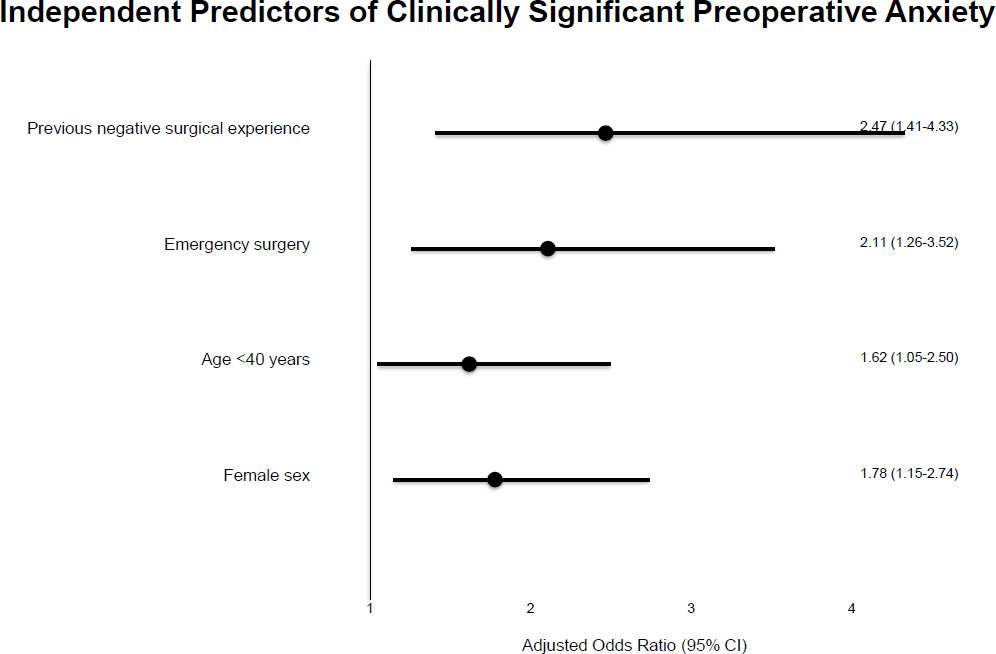
Forest plot showing adjusted odds ratios (AORs) and 95% confidence intervals (CIs) for independent predictors of clinically significant preoperative anxiety (APAIS ≥11).
Note: Vertical reference line: AOR = 1.00
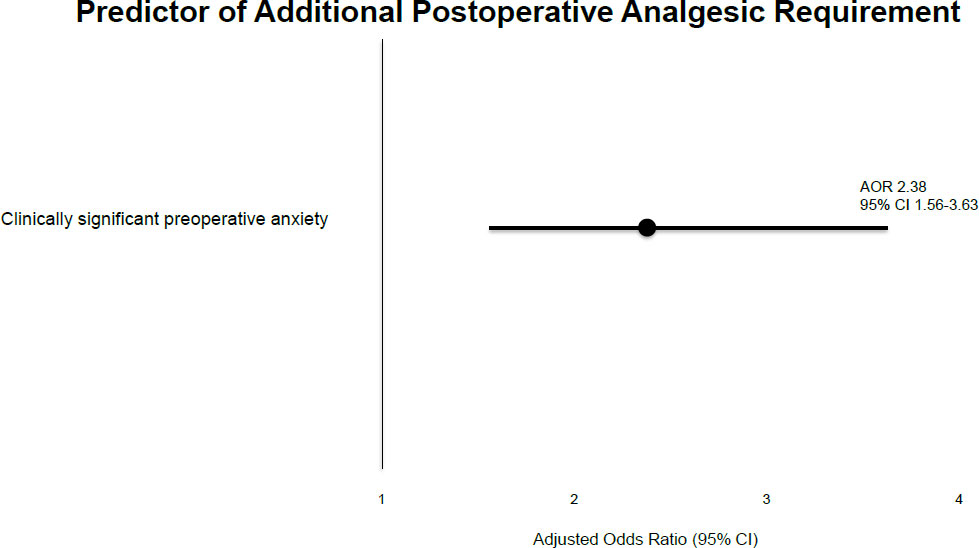
Forest plot showing adjusted odds ratios (AORs) and 95% confidence intervals (CIs) for predictors of additional postoperative analgesic requirement.
Note: Multivariable logistic regression; vertical reference line: AOR = 1.00
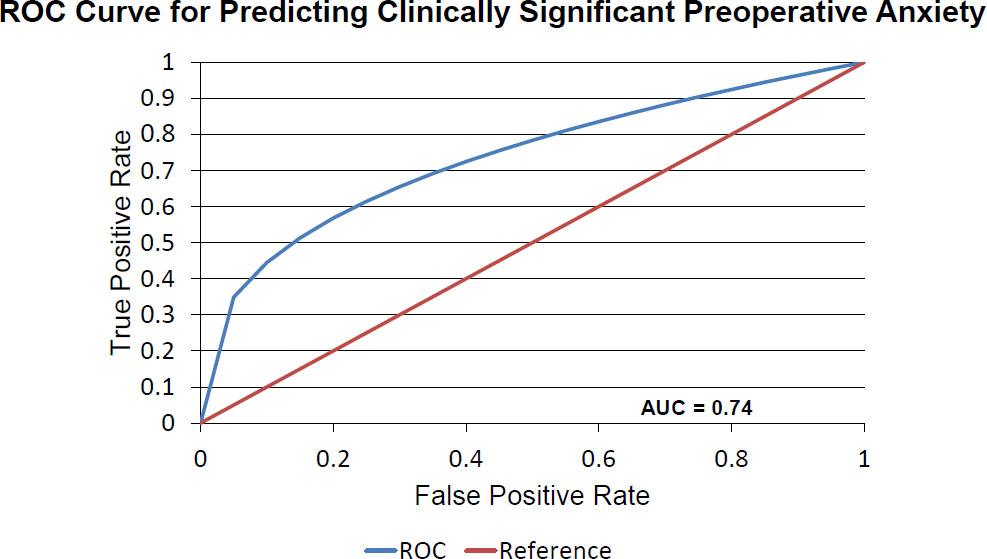
Receiver operating characteristic (ROC) curve for the multivariable model predicting clinically significant preoperative anxiety. Area under the curve (AUC) = 0.74.
Abbreviation: AUC = 0.74, as reported in the multivariable model.
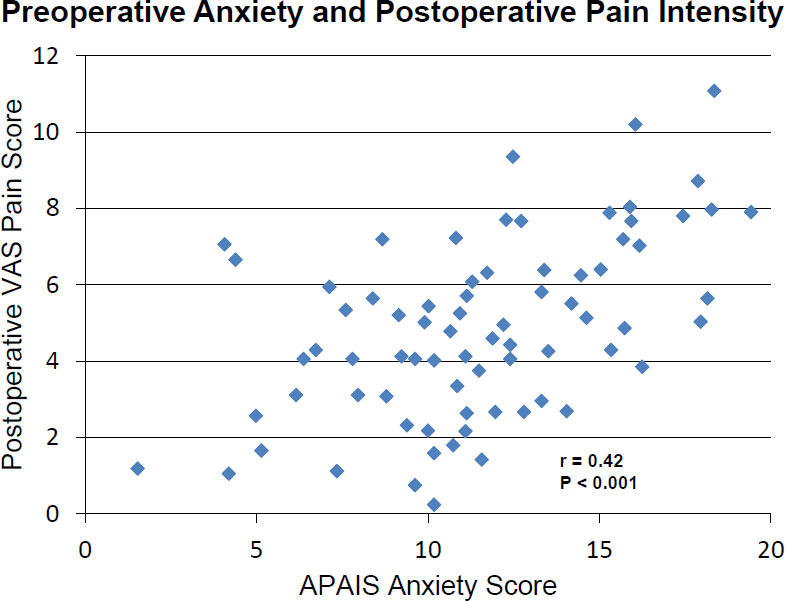
Scatter plot showing the correlation between Amsterdam Preoperative Anxiety and Information Scale (APAIS) anxiety scores and postoperative pain intensity measured using the visual analog scale (VAS) (r = 0.42, P < 0.001).
Abbreviations: APAIS = Amsterdam Preoperative Anxiety and Information Scale; VAS = visual analog scale
3.5. Postoperative Recovery and Complications
Postoperative nausea and vomiting occurred more frequently in anxious patients compared with non-anxious patients (29.2% vs 18.8%; P = 0.02). Sleep disturbance during the first postoperative night was also more common in the anxiety group (44.5% vs 21.7%; P < 0.001). Similarly, postoperative shivering was reported more frequently among anxious patients (17.8% vs 9.4%; P = 0.03). These findings are summarized in Table 5.
| Variable | Anxiety (n=236) | No Anxiety (n=188) | p-value |
|---|---|---|---|
| Postoperative nausea and vomiting, n (%) | 69 (29.2) | 35 (18.8) | 0.02 |
| Sleep disturbance (first postoperative night), n (%) | 105 (44.5) | 41 (21.7) | <0.001 |
| Postoperative shivering, n (%) | 42 (17.8) | 18 (9.4) | 0.03 |
3.6. Patient Satisfaction
High satisfaction with anesthesia care (Likert score 4–5) was reported by 82.1% of non-anxious patients compared with 61.0% of anxious patients (P < 0.001). A significant negative correlation was observed between APAIS scores and satisfaction scores (r = −0.38, P < 0.001). Low satisfaction (score ≤3) was significantly more likely among patients with anxiety (OR 2.91; 95% CI 1.74–4.85) (Table 6).
| Variable | Anxiety (n=236) | No Anxiety (n=188) | p-value |
|---|---|---|---|
| High satisfaction (score 4–5), n (%) | 144 (61.0) | 154 (82.1) | <0.001 |
| Low satisfaction (score ≤3), n (%) | 92 (39.0) | 34 (17.9) | <0.001 |
| Correlation (APAIS vs satisfaction), r | −0.38 | — | <0.001 |
3.7. Multivariate Analysis
Multivariate logistic regression analysis identified female sex (AOR 1.78; 95% CI 1.15–2.74; P = 0.009), age <40 years (AOR 1.62; 95% CI 1.05–2.50; P = 0.03), emergency surgery (AOR 2.11; 95% CI 1.26–3.52; P = 0.004), and prior negative surgical experience (AOR 2.47; 95% CI 1.41–4.33; P = 0.002) as independent predictors of clinically significant preoperative anxiety (Table 7, Fig. 1).
| Variable | Adjusted Odds Ratio | 95% CI | p-value |
|---|---|---|---|
| Female sex | 1.78 | 1.15–2.74 | 0.009 |
| Age <40 years | 1.62 | 1.05–2.50 | 0.03 |
| Emergency surgery | 2.11 | 1.26–3.52 | 0.004 |
| Previous negative surgical experience | 2.47 | 1.41–4.33 | 0.002 |
In a secondary regression model, preoperative anxiety remained an independent predictor of additional postoperative analgesic requirement (AOR 2.38; 95% CI 1.56–3.63; P < 0.001) (Table 8, Fig. 2).
| Variable | Adjusted Odds Ratio | 95% CI | p-value |
|---|---|---|---|
| Clinically significant anxiety | 2.38 | 1.56–3.63 | <0.001 |
| Emergency surgery | 1.69 | 1.02–2.81 | 0.04 |
The multivariate model demonstrated acceptable discrimination for predicting clinically significant preoperative anxiety (AUC = 0.74) (Fig. 3).
4. DISCUSSION
This study demonstrates that preoperative anxiety is highly prevalent among adult surgical patients and is independently associated with adverse perioperative outcomes, including increased postoperative pain, higher analgesic requirements, delayed recovery, and reduced patient satisfaction. The observed prevalence of clinically significant anxiety (55.7%) is consistent with global estimates, reinforcing that preoperative anxiety remains a substantial and under-addressed component of perioperative care, as confirmed in several recent perioperative reviews and meta-analyses [2, 3, 9].
The prevalence reported in this study aligns with previous investigations using the Amsterdam Preoperative Anxiety and Information Scale (APAIS), where moderate to high anxiety levels have been observed in 40%–70% of surgical populations [4, 7, 14, 15]. Variability across studies may reflect differences in surgical populations, urgency of procedures, and sociocultural contexts. The inclusion of emergency surgeries in this cohort likely contributed to the relatively higher prevalence observed.
Female sex, younger age, emergency surgery, and prior negative surgical experience emerged as independent predictors of preoperative anxiety. These findings are consistent with existing literature identifying female sex, younger age, and surgery-specific fears as significant determinants of perioperative anxiety [11-13, 15]. Psychosocial factors, differences in health perception, and higher baseline anxiety prevalence in women may explain this association. Similarly, younger patients may have greater anticipatory concerns regarding anesthesia and postoperative outcomes, whereas older individuals may have more prior healthcare exposure and coping mechanisms.
Emergency surgery was strongly associated with increased anxiety, likely due to limited time for preoperative counseling and heightened uncertainty regarding outcomes. Previous studies have emphasized the importance of adequate information and communication in mitigating anxiety, particularly in time-constrained clinical scenarios [14, 15]. In addition, a history of negative surgical experiences independently predicted anxiety, suggesting that prior adverse perioperative events may have lasting psychological effects that influence subsequent surgical encounters.
Patients with significant anxiety reported higher rates of perceived intraoperative instability, delayed awakening, and prolonged PACU stay. Although these outcomes were based on patient-reported data rather than objective intraoperative measurements, they are supported by plausible physiological mechanisms. Anxiety activates the sympathetic nervous system and hypothalamic–pituitary–adrenal axis, leading to increased catecholamine release and cardiovascular variability [4, 6, 15]. Prior studies have demonstrated that anxious patients exhibit greater peri-induction hemodynamic responses and altered anesthetic requirements [6, 15]. These findings suggest that psychological factors may influence both intraoperative experiences and recovery profiles.
The association between preoperative anxiety and postoperative pain is one of the most robust findings in perioperative research and was clearly demonstrated in this study. Patients with significant anxiety reported higher postoperative pain scores and were more than twice as likely to require additional analgesia. Recent evidence has further demonstrated that elevated preoperative anxiety contributes to increased perioperative anesthetic and analgesic consumption [5, 10]. These findings are consistent with previous studies demonstrating that anxiety independently predicts increased postoperative pain and analgesic consumption [16, 17]. The mechanisms underlying this relationship are multifactorial and include reduced pain thresholds, enhanced central sensitization, increased attention to nociceptive stimuli, and activation of stress-related neuroendocrine pathways.
Beyond pain, anxiety was associated with a higher incidence of postoperative nausea and vomiting, shivering, and sleep disturbance. These findings suggest that the impact of anxiety extends beyond pain to broader recovery outcomes, including prolonged recovery time and delayed postoperative rehabilitation [10, 18]. Psychological stress may influence neuroendocrine responses, thereby increasing susceptibility to postoperative complications. Sleep disturbance, in particular, is clinically significant, as it has been linked to delayed recovery and impaired healing. Previous studies have demonstrated that preoperative psychological distress adversely affects postoperative sleep quality and recovery trajectories [19, 20].
Patient satisfaction with anesthesia care was significantly lower among individuals with higher anxiety levels. This may reflect increased sensitivity to discomfort and heightened expectations during the perioperative period. Previous research has shown that improved preoperative communication, anesthetic consultation, and reassurance can reduce anxiety and enhance patient satisfaction [14, 21]. These findings underscore the importance of incorporating structured psychological assessment and communication strategies into routine pre-anesthetic evaluation.
The clinical implications of this study are substantial. Routine screening for preoperative anxiety using brief, validated tools such as APAIS is feasible in clinical practice and may facilitate early identification of high-risk patients [14]. Non-pharmacological interventions, including perioperative music therapy and structured counseling, have been shown to reduce anxiety and improve recovery outcomes [22]. Furthermore, recognition of anxiety as an independent predictor of postoperative analgesic requirement supports the integration of psychological factors into individualized perioperative pain management strategies [17]. Incorporating anxiety assessment into enhanced recovery protocols may improve both clinical outcomes and patient experience. Recent systematic reviews further support structured non-pharmacological approaches, including psychological prehabilitation, patient education, relaxation techniques, and other anxiety-reduction strategies, while emphasizing heterogeneity in the available evidence [23-25].
In summary, this study highlights the significant burden of preoperative anxiety and its independent association with multiple adverse perioperative outcomes. These findings support the need for routine psychological assessment and targeted interventions as part of comprehensive perioperative care.
Future prospective studies should incorporate objective physiological measures, including heart rate, blood pressure, heart rate variability, and perioperative stress biomarkers, better to characterize the relationship between psychological anxiety and physiological responses. In addition, interventional studies evaluating structured preoperative counseling, enhanced patient education, music therapy, relaxation techniques, and other non-pharmacological anxiety-reduction strategies are warranted to determine whether reducing preoperative anxiety translates into improved perioperative outcomes, enhanced recovery, and greater patient satisfaction.
5. STRENGTHS AND LIMITATIONS
This study has several strengths. It utilized a validated instrument (APAIS) to assess preoperative anxiety, included a relatively large sample size, and applied multivariable regression analysis to adjust for potential confounders. The high response rate further strengthens the internal validity of the findings.
However, certain limitations should be acknowledged. The cross-sectional design precludes the establishment of causal relationships. All intraoperative and postoperative variables were based on patient self-report, which introduces the possibility of recall and reporting bias despite the use of a limited three-month recall period. Objective intraoperative data were not obtained from medical records; therefore, findings related to intraoperative events should be interpreted with caution. Additionally, residual confounding cannot be excluded, and the single-center setting may limit the generalizability of the results.
Another important limitation is that objective physiological indicators of perioperative anxiety, including heart rate, blood pressure, and other intraoperative hemodynamic parameters, were not recorded. Because the study relied exclusively on patient-reported outcomes, it was not possible to correlate subjective anxiety scores with objective physiological stress responses.
CONCLUSION
This cross-sectional study revealed that preoperative anxiety was a very prevalent issue, occurring in 55.7% of surgical patients in this tertiary care hospital. Female gender, younger age, emergency surgery, and previous negative surgical experience were independent predictors of significant anxiety. Notably, patients with anxiety had significantly increased postoperative pain, greater need for rescue analgesia, increased incidence of patient-reported intraoperative instability and delayed recovery, increased postoperative symptoms, and decreased patient satisfaction with anesthesia care.
These results indicate that preoperative anxiety is a clinically significant and potentially modifiable risk factor that is associated with perioperative outcomes. The inclusion of routine screening for anxiety using a validated assessment tool such as APAIS, combined with individualized perioperative management strategies, may potentially improve anesthetic stability and optimize patient recovery.
AUTHORS’ CONTRIBUTIONS
The authors confirm their contributions to the paper as follows: K.N.P.P.: Conceptualization, Methodology, Data Curation, Formal Analysis, Writing – Original Draft, Supervision; B.M.: Conceptualization, Methodology, Data Curation, Formal Analysis, Writing – Original Draft, Supervision; K.S.D.P.: Conceptualization, Investigation, Validation, Writing – Review & Editing. All authors approved the final manuscript.
LIST OF ABBREVIATIONS
| APAIS | = Amsterdam Preoperative Anxiety and Information Scale |
| AOR | = Adjusted Odds Ratio |
| ASA | = American Society of Anesthesiologists |
| AUC | = Area Under the Curve |
| CI | = Confidence Interval |
| PACU | = Post-Anesthesia Care Unit |
| PONV | = Postoperative Nausea and Vomiting |
| ROC | = Receiver Operating Characteristic |
| SD | = Standard Deviation |
| VAS | = Visual Analog Scale |
| VAS-A | = Visual Analog Scale for Anxiety |
ETHICS APPROVAL AND CONSENT TO PARTICIPATE
This study was approved by the Institutional Ethics Committee of Anna Gowri Medical College and Hospital, Puttur, India (reference number IEC/2024/057) on 12 December 2024.
HUMAN AND ANIMAL RIGHTS
All procedures performed in studies involving human participants were conducted in accordance with the ethical standards of the institutional research committee and the 1964 Declaration of Helsinki and its later amendments.
CONSENT FOR PUBLICATION
Written informed consent was obtained electronically from all participants before completion of the questionnaire.
AVAILABILITY OF DATA AND MATERIALS
All the data and supporting material is available within the article.
ACKNOWLEDGEMENTS
The authors thank all participants who contributed to this study.