All published articles of this journal are available on ScienceDirect.

Comparative Study between Ketamine plus Etomidate and Ketamine plus Dexmedetomidine in Gastrointestinal Endoscopy: A Randomized Controlled Trial
 iD
Vinit H. Pathak1
iD
Akshatkumar P. Trivedi1
iD
Alpa M. Patel1
iD
Authors Info & Affiliations
Abstract
Background & Aims
Procedural sedation is a cornerstone of modern gastrointestinal endoscopy, ensuring patient comfort, compliance, and optimal procedural efficacy. This randomized controlled study was designed to compare the sedation quality, hemodynamic profiles, and recovery characteristics of Ketamine combined with Dexmedetomidine versus Ketamine combined with Etomidate in adult patients undergoing elective gastrointestinal endoscopy.
Material & Methods
After obtaining Institutional Ethics Committee clearance and registration with the Clinical Trials Registry of India (CTRI/2024/05/066829), 108 adult patients of American Society of Anesthesiologists (ASA) Physical Status Grade I to IV scheduled for elective gastrointestinal endoscopies were enrolled. The patients were randomized into two equal groups of 54 each: Group D (Ketamine plus Dexmedetomidine) and Group E (Ketamine plus Etomidate). The dosing and drug preparations were standardized to control for ketamine. Key parameters recorded included the Ramsay Sedation Score (RSS), Visual Analogue Scale (VAS) pain score in recovery, onset of sedation, recovery times, and adverse events.
Results
The mean onset of sedation was significantly faster in Group E (2.94 ± 1.79 min) than in Group D (5.78 ± 1.43 min) (p < 0.001). Group E also demonstrated a significantly shorter recovery time (15.22 ± 4.05 min) than Group D (26.52 ± 4.75 min) (p < 0.001). However, Group D showed significantly lower postoperative pain scores (VAS: 0.8 ± 0.5 vs. 2.2 ± 0.6 in Group E, p < 0.001). A baseline imbalance was observed where Group E had a higher proportion of patients with comorbidities (74% vs. 37% in Group D, p < 0.001), representing a higher-risk cohort. Hemodynamic variations were minor in both groups, though Group D exhibited slightly greater reductions in systolic and diastolic blood pressure (p < 0.001). Only one subclinical respiratory desaturation event occurred in Group D, which was managed with simple airway maneuvers.
Conclusion
Ketamine combined with Etomidate provides rapid onset and quicker recovery, making it highly suitable for high-turnover diagnostic procedures, even in high-risk patients. Conversely, Ketamine combined with Dexmedetomidine offers superior postoperative analgesia, albeit with slower onset, delayed recovery, and mild hemodynamic variations. Both regimens are safe and highly effective under vigilant monitoring.
1. INTRODUCTION
Gastrointestinal endoscopies, such as esophagogastroduodenoscopy (upper GI endoscopy) and colonoscopy, have rapidly become the primary diagnostic and therapeutic modalities for various gastrointestinal tract disorders [1]. As therapeutic endoscopic interventions continue to evolve, they have substantially reduced the necessity for invasive open surgeries, resulting in shorter hospital stays and a significant reduction in overall healthcare expenditures [1, 2]. However, the increasing volume of both diagnostic and therapeutic gastrointestinal endoscopies presents unique clinical challenges that must be systematically addressed. These procedures frequently induce anxiety, fear, physical discomfort, and pain, rendering the intervention highly unpleasant for patients and technically demanding for the endoscopist [3].
Upper gastrointestinal endoscopic procedures inherently involve a shared airway, as both the endoscopist and the anesthesiologist depend on the same anatomical space for their respective interventions [1, 2]. This shared access increases the risk of airway obstruction, particularly during deep sedation, when upper airway muscle tone is reduced and protective reflexes are blunted [1]. The physical presence of the endoscope itself further narrows the pharyngeal airway and can precipitate dynamic airway collapse, particularly in patients with predisposing factors such as obesity, Obstructive Sleep Apnea (OSA), or advanced age [1]. Additionally, airway rescue is technically complex once the gastroscope is in situ, as emergent maneuvers like face-mask ventilation or the insertion of airway adjuncts are physically restricted by the endoscope [2]. Despite significant advancements in modern sedation practices, the management of upper airway compromise during upper gastrointestinal endoscopy remains a critical patient safety challenge requiring constant anticipation and rapid intervention.
To mitigate these difficulties, the involvement of anesthesiologists and the implementation of structured procedural sedation protocols have become crucial. Numerous sedative, anxiolytic, and analgesic drugs are currently utilized, but each possesses distinct pharmacological limitations and side effects. Midazolam, a benzodiazepine, has a rapid onset but can lead to prolonged recovery and cognitive impairment in the elderly [4, 5]. Fentanyl, a synthetic opioid, provides rapid analgesia but carries risks of dose-dependent respiratory depression and chest wall rigidity [4, 5]. Ketamine, a phencyclidine derivative and N-methyl-D-aspartate (NMDA) receptor antagonist, produces a state of dissociative anesthesia, preserves airway reflexes, and provides potent somatic analgesia [4-6]. However, when used as a sole agent, ketamine frequently causes sympathetic stimulation, resulting in tachycardia, transient hypertension, and unpleasant emergence delirium [4] (Fig. 1).
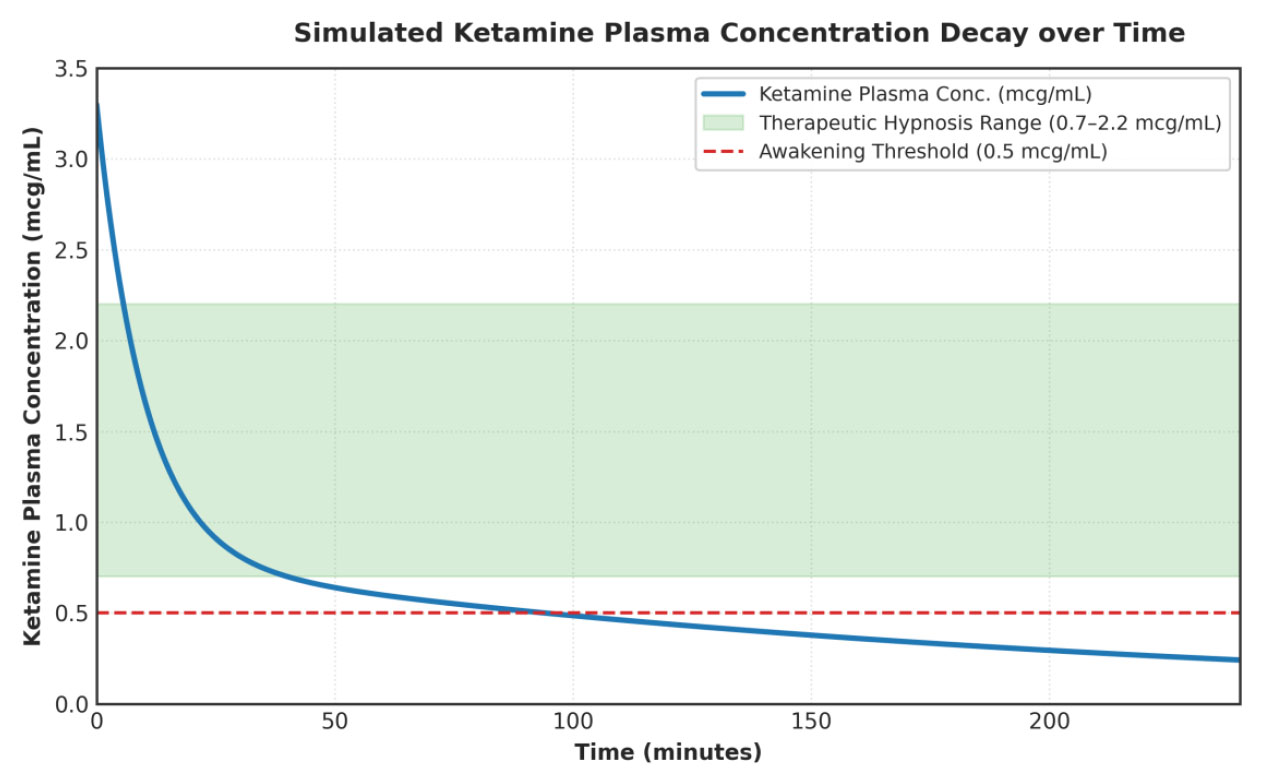
Simulated ketamine plasma level over time.
Legend: Original mathematical simulation of plasma concentration decay of Ketamine (2.0 mg/kg IV bolus) plotted directly by the authors using a standard two-compartment open pharmacokinetic model [C(t) = A*exp(-alpha*t) + B*exp(-beta*t)]. The graph illustrates initial rapid distribution (alpha half-life ~7 min) and elimination (beta half-life ~2.5 h). The shaded band depicts the therapeutic hypnosis range (0.7–2.2 mcg/mL), with awakening at <0.5 mcg/mL. Model parameters were sourced from published numerical values in Miller's Anesthesia, 9th ed [5]. and Morgan & Mikhail's Clinical Anesthesiology, 7th ed [6].
To counteract ketamine-induced cardiovascular stimulation, it is often combined with other agents. Dexmedetomidine, a selective alpha-2 adrenergic receptor agonist, provides cooperative sedation, anxiolysis, and moderate analgesia without respiratory depression [7]. When combined with ketamine, dexmedetomidine effectively blunts the sympathetic tachycardia and hypertension induced by ketamine, resulting in stable hemodynamics and a lower incidence of emergence reactions, as shown in Fig. (2) [7]. This synergistic combination has demonstrated excellent cardiorespiratory stability and superior postoperative analgesia [2, 7, 8].
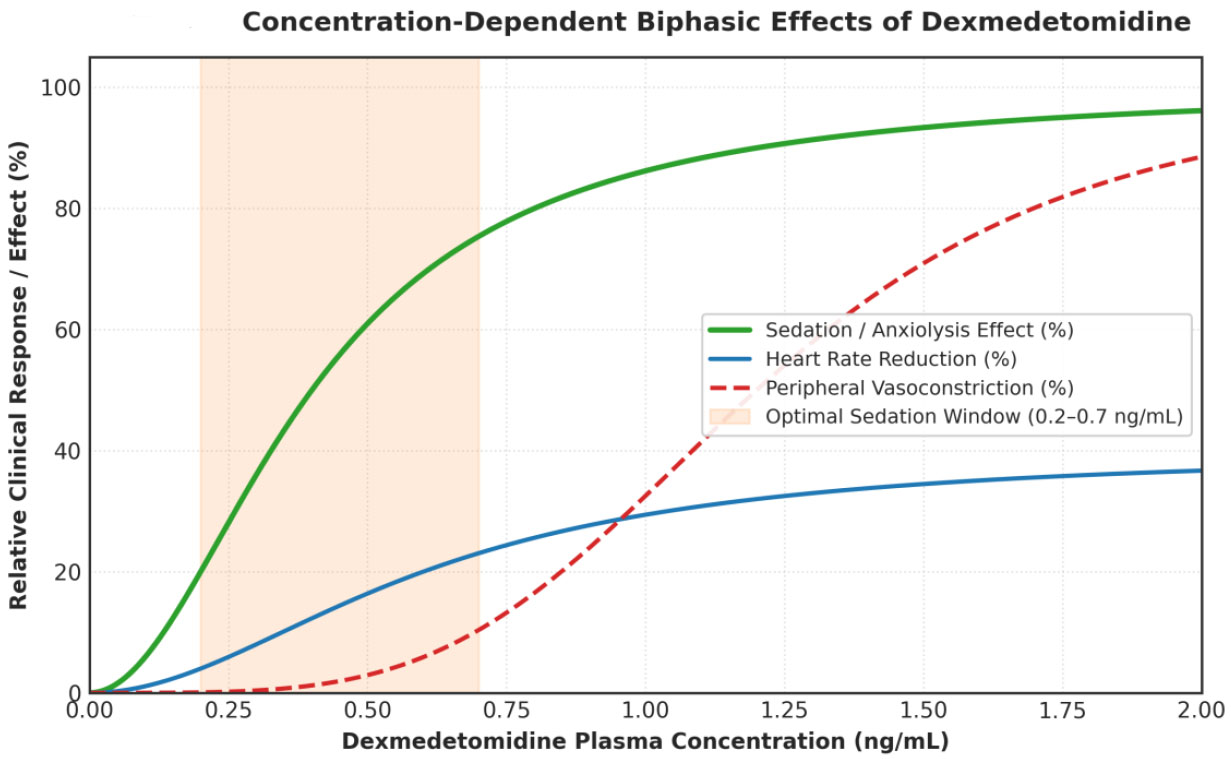
Concentration-dependent biphasic effects of dexmedetomidine.
Legend: Original computer simulation plotted directly by the authors depicting the biphasic relationship between plasma concentration of Dexmedetomidine (ng/mL) and clinical effects, plotted using a concentration-effect sigmoidal Emax model based on published dose-response relationship parameters. Lower concentrations (0.2–0.7 ng/mL) yield cooperative sedation and central sympatholysis; higher concentrations (>1.2 ng/mL) stimulate peripheral alpha-2b receptors, causing vasoconstriction. (Conceptually redrawn and adapted with permission from Gerlach and Dasta, Annals of Pharmacotherapy 2007 [7]).
Etomidate, an imidazole-derivative hypnotic agent, is widely known for its rapid onset, brief duration, and remarkable cardiovascular stability. Although etomidate provides superior cardiovascular stability compared to propofol, it is devoid of analgesic properties and is frequently associated with undesirable side effects such as myoclonus, injection pain, Post-Operative Nausea and Vomiting (PONV), and transient adrenal suppression (Fig. 3) [9, 10]. Interestingly, combining etomidate with ketamine (commonly termed “ketofol” or ketamine-etomidate) has been shown to neutralize these side effects. Ketamine prevents etomidate-induced myoclonus and provides the necessary analgesia, while etomidate blunts ketamine's sympathetic side effects, leading to rapid sedation, stable intraoperative hemodynamics, and smooth, rapid recovery [11, 12].
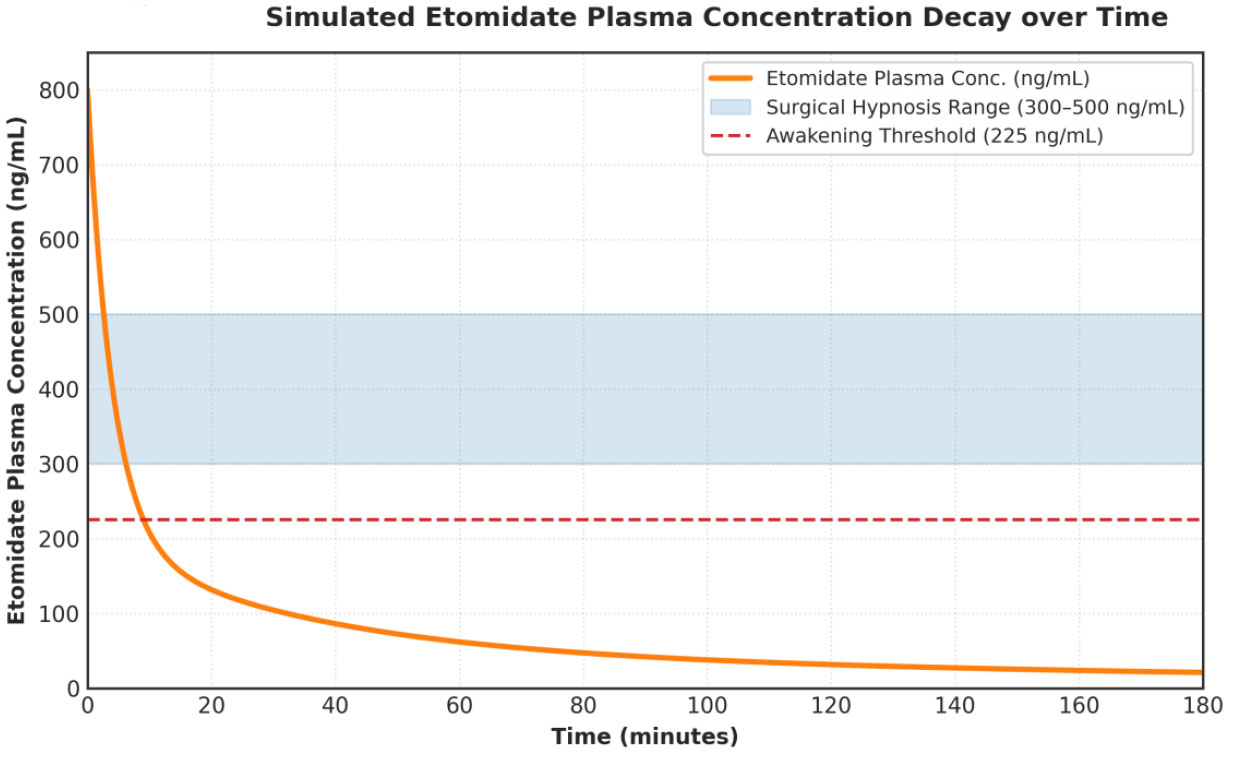
Simulated etomidate plasma level over time.
Legend: Original mathematical simulation of plasma concentration decay of Etomidate (0.3 mg/kg IV bolus) plotted directly by the authors using a standard three-compartment open pharmacokinetic model. The graph illustrates rapid initial distribution (alpha half-life ~2.7 min) and terminal elimination (gamma half-life ~3.5 h). The shaded area highlights the surgical hypnosis range (300–500 ng/mL), with awakening at <225 ng/mL. (Conceptually redrawn and adapted with permission from Van Hamme et al., Anesthesiology 1978 [9]).
While multiple studies have evaluated these drug combinations in various procedural sedation settings, there is a lack of direct comparison between the ketamine-dexmedetomidine and ketamine-etomidate combinations in the context of gastrointestinal endoscopy. Therefore, this randomized, double-blinded clinical study was conducted to compare the onset of sedation, recovery profiles, quality of analgesia, hemodynamic stability, and adverse event profiles of these two combinations in adult patients undergoing elective gastrointestinal endoscopy [13].
2. MATERIAL & METHODS
2.1. Ethical Approval and Trial Registration
This prospective, randomized, double-blinded, comparative clinical trial was conducted in the Department of Anaesthesiology at Shree Krishna Hospital, Karamsad, Gujarat, India, after obtaining approval from the Human Research and Ethics Committee (IEC/BU/148/ Faculty/8/12/2024, approved on 04/01/2024). The study was prospectively registered with the Clinical Trials Registry of India (CTRI/2024/05/066829; registered on 06/05/2024, trial commenced on 07/05/2024) and conducted in strict compliance with the principles of the Declaration of Helsinki. Written informed consent was obtained from all participating patients and their legal representatives prior to enrollment.
2.2. Patient Selection and Eligibility Criteria
A total of 108 patients aged 18 to 70 years of either sex, with American Society of Anesthesiologists (ASA) Physical Status Grade I to IV, scheduled for elective diagnostic or therapeutic gastrointestinal endoscopy (including upper gastrointestinal endoscopy and colonoscopy) were enrolled. The inclusion criteria were: (1) patients undergoing elective GI endoscopies under procedural sedation, (2) aged between 18 and 70 years, and (3) ASA Physical Status Grade I-IV. The exclusion criteria were: (1) patient refusal, (2) known allergy or hypersensitivity to ketamine, etomidate, or dexmedetomidine, (3) uncontrolled hypertension (systolic BP > 160 mmHg or diastolic BP > 100 mmHg), (4) pregnancy or lactation, (5) poorly controlled diabetes mellitus (HbA1c > 10%), and (6) high cardiac or respiratory risk (unstable angina, severe valvular heart disease, or severe chronic obstructive pulmonary disease).
2.3. Randomization and Double-Blinding
Using a computer-generated random number table (via WinPepi software), the 108 enrolled patients were randomly allocated into two equal groups of 54 each: Group D (Ketamine plus Dexmedetomidine) and Group E (Ketamine plus Etomidate). To ensure methodological transparency and reduce allocation bias, concealment was achieved using Sequentially Numbered, Opaque, Sealed Envelopes (SNOSE) containing the randomized group assignment. An independent anesthesia nurse who was not involved in patient monitoring or data collection opened the envelopes and prepared the study infusions in identical, unlabelled 20 mL syringes. The investigator administering the study medications, the endoscopist performing the procedure, and the patient were all completely blinded to the group allocation, ensuring strict double-blinding.
2.4. Anesthetic and Sedation Protocol
All patients underwent a thorough pre-anesthetic evaluation. Standard fasting guidelines (6 hours for solids, 2 hours for clear liquids) were strictly enforced. In the procedure room, standard monitors including Electrocardiography (ECG), Non-Invasive Blood Pressure (NIBP), and pulse oximetry (SpO2) were attached. Supplemental oxygen was administered at 4 L/min via nasal cannula. Intravenous access was established, and a slow crystalloid infusion was initiated. To control for the sedative and analgesic effects of ketamine and isolate the differences due to the adjunctive agents, the dosage of Ketamine was standardized and kept equal in both groups.
The study drug regimens were prepared as follows:
- Group D (Ketamine-Dexmedetomidine): Patients received an intravenous bolus of Ketamine (0.5 mg/kg) and Dexmedetomidine (0.5 mcg/kg) administered slowly over 10 minutes, followed by a weight-adjusted maintenance infusion of Ketamine (0.5 mg/kg/h) and Dexmedetomidine (0.5 mcg/kg/h) titrated using an automated syringe infusion pump to maintain the target sedation level.
- Group E (Ketamine-Etomidate): Patients received an intravenous bolus of Ketamine (0.5 mg/kg) and Etomidate (0.1 mg/kg) administered over 60 seconds, followed by a weight-adjusted maintenance infusion of Ketamine (0.5 mg/kg/h) and Etomidate (0.1 mg/kg/h) titrated using an automated syringe infusion pump to maintain the target sedation level.
The target sedation depth was set at a Ramsay Sedation Score (RSS) of 3 to 4 (where RSS 3 indicates cooperative, oriented, and responding to commands; RSS 4 indicates a brisk response to a light glabellar tap or loud auditory stimulus) [14, 15]. If the patient exhibited signs of inadequate sedation (RSS < 3, purposeful movement, or coughing), rescue sedation consisting of a slow bolus of Propofol (0.5 mg/kg IV) or additional Ketamine (0.25 mg/kg IV) was administered. The total requirement of rescue medications was recorded.
2.5. Outcome Measures and Data Collection
The primary outcome measure was the onset of sedation, defined as the time interval (in minutes) from the initiation of the study drug injection to the achievement of the target Ramsay Sedation Score of ≥ 3 [15].
Secondary Outcome Measures Included the following:
- Recovery Time: Defined as the time interval (in minutes) from the end of the endoscopic procedure to the achievement of a Ramsay Sedation Score of 2 (cooperative, oriented, and awake).
- Quality of Analgesia: Assessed using the standard Visual Analogue Scale (VAS) score (0 = no pain, 10 = worst imaginable pain). The scale was explained to patients preoperatively, and the VAS score was recorded by a blinded recovery nurse in the Post-Anesthesia Care Unit (PACU) at 5, 10, 15, and 30 minutes after completion of the procedure [16, 17].
- Hemodynamic and Respiratory Parameters: Heart rate (HR), respiratory rate (RR), Systolic Blood Pressure (SBP), diastolic Blood Pressure (DBP), and oxygen saturation (SpO2) were recorded at baseline (pre-procedure), intra-procedure (every 5 minutes), and post-procedure (upon transfer to PACU) [18, 19].
- Adverse Events: The incidence of any complications was monitored and recorded, including subclinical respiratory depression (defined as SpO2 < 92% lasting more than 15 seconds, managed with airway positioning or jaw thrust), hypotension (decrease in SBP by >20% from baseline), hypertension (increase in SBP by >20% from baseline), bradycardia (HR < 50 bpm), tachycardia (HR > 100 bpm), and Postoperative Nausea and Vomiting (PONV).
2.6. Sample Size Calculation
The sample size was calculated using WinPepi software. Based on a previous similar study [12], the Standard Deviation (SD) of the onset of sedation rate was 6.8 minutes for the ketamine-dexmedetomidine group and 5.6 minutes for the ketamine-etomidate group. To detect a clinically significant difference of 3 minutes between the two groups, with a 5% level of significance (alpha = 0.05) and a statistical power of 70%, a minimum sample size of 54 patients per group was required (total sample size of 108 patients). While 70% power is considered a potential limitation, it was selected given the specialized nature of the procedure and clinical recruitment constraints at our single center; this limitation is fully acknowledged in the Discussion section.
2.7. Statistical Analysis
Statistical analysis was performed using SPSS version 26.0. Continuous quantitative data (age, BMI, sedation onset, recovery times, VAS scores, and vitals) were expressed as Mean ± Standard Deviation (SD) and analyzed using the independent-samples t-test for between-group comparisons. Within-group differences (pre- vs. post-procedure vitals) were analyzed using the paired-samples t-test. Categorical qualitative variables (gender, ASA physical status grade, comorbidities, procedure types, and adverse events) were expressed as frequencies and percentages, and analyzed using the Chi-square test or Fisher's exact test, as appropriate. A p-value of <0.05 was considered statistically significant, and exact p-values were reported.
3. RESULTS
A total of 108 patients undergoing elective gastrointestinal endoscopy were enrolled in this randomized controlled trial. All patients successfully completed the study protocol without any dropouts or exclusions post-randomization. The demographic and baseline clinical characteristics of the study participants in both groups are summarized in Tables 1, 2, and 3. The participant flow through the trial phases is depicted in the CONSORT flow diagram (Fig. 4). The two groups were highly comparable with respect to gender distribution (Table 1), BMI distribution, and baseline hemodynamic parameters, ensuring a robust foundation for comparing the experimental sedation regimens.
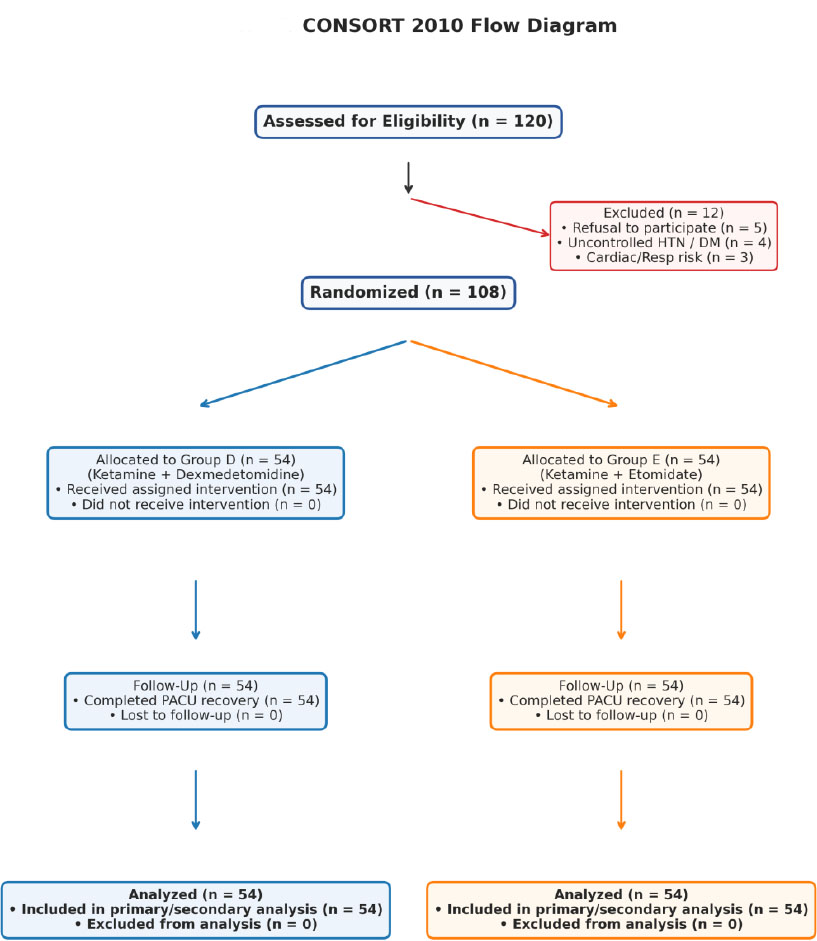
CONSORT 2010 flow diagram.
Legend: Original CONSORT 2010 flow diagram constructed by the authors illustrating participant screening (n=120), exclusions (n=12), randomization (n=108), 1:1 allocation to Group D (Ketamine + Dexmedetomidine, n=54) and Group E (Ketamine + Etomidate, n=54), follow-up, and final analysis.
| Gender | Group D (n=54) | % | Group E (n=54) | % | p-value (Chi-sq) |
|---|---|---|---|---|---|
| Male | 25 | 46.3% | 29 | 53.7% | 0.441 |
| Female | 29 | 53.7% | 25 | 46.3% | 0.441 |
| Total | 54 | 100.0% | 54 | 100.0% | - |
| Group | BMI Category | PR Pre | PR Post | RR Pre | RR Post | SBP Pre | SBP Post | DBP Pre | DBP Post | SpO2 Pre | SpO2 Post |
|---|---|---|---|---|---|---|---|---|---|---|---|
| Group D | Underweight (<18.5) | 81.2±7.5 | 75.4±6.8 | 16.2±1.2 | 15.8±1.1 | 124.2±8.5 | 115.2±7.8 | 78.5±5.2 | 73.2±4.8 | 98.6±0.9 | 98.0±1.1 |
| Group D | Normal (18.5–24.9) | 82.1±8.0 | 76.1±7.2 | 16.5±1.4 | 16.0±1.2 | 125.8±9.8 | 116.5±8.8 | 79.8±6.1 | 74.0±5.5 | 98.5±1.0 | 97.9±1.2 |
| Group D | Overweight (25–30.9) | 83.5±8.4 | 76.8±7.6 | 16.8±1.5 | 16.1±1.3 | 128.4±11.2 | 117.8±9.5 | 81.2±7.0 | 74.8±6.0 | 98.4±1.2 | 97.8±1.3 |
| Group D | Obese (>30.9) | 84.2±8.8 | 77.5±8.0 | 17.1±1.6 | 16.3±1.4 | 131.0±12.5 | 119.2±10.2 | 83.0±7.8 | 75.5±6.5 | 98.2±1.3 | 97.5±1.4 |
| Group E | Underweight (<18.5) | 80.8±7.8 | 80.1±7.2 | 16.1±1.1 | 15.9±1.0 | 123.8±8.2 | 122.5±7.9 | 78.2±5.0 | 77.5±4.6 | 98.7±0.8 | 98.2±1.0 |
| Group E | Normal (18.5–24.9) | 81.5±8.2 | 80.6±7.5 | 16.4±1.3 | 16.1±1.1 | 125.2±10.2 | 123.8±9.2 | 79.5±6.2 | 78.6±5.8 | 98.6±0.9 | 98.1±1.1 |
| Group E | Overweight (25–30.9) | 82.8±8.6 | 81.8±8.0 | 16.7±1.4 | 16.3±1.2 | 127.8±11.5 | 126.0±10.4 | 80.8±7.1 | 79.8±6.4 | 98.5±1.1 | 98.0±1.2 |
| Group E | Obese (>30.9) | 83.6±9.0 | 82.5±8.3 | 17.0±1.5 | 16.5±1.3 | 130.2±12.8 | 128.5±11.2 | 82.5±7.9 | 81.2±7.0 | 98.3±1.2 | 97.8±1.3 |
| Co-morbidities | Group D (n=54) | % | Group E (n=54) | % | p-value (Chi-sq) |
|---|---|---|---|---|---|
| Present | 20 | 37.0% | 40 | 74.0% | <0.001* |
| Absent | 34 | 63.0% | 14 | 26.0% | <0.001* |
| Total | 54 | 100.0% | 54 | 100.0% | - |
As shown in Table 1, Group D (Ketamine plus Dexmedetomidine) consisted of 25 male (46.3%) and 29 female (53.7%) patients. Group E (Ketamine plus Etomidate) consisted of 29 male (53.7%) and 25 female (46.3%) patients. This gender distribution was statistically comparable between the two study groups (p = 0.441, Chi-square test), ruling out gender as a confounding factor in the clinical outcomes.
Notably, a statistically significant baseline imbalance was observed in the distribution of co-morbidities between the two groups. As detailed in Table 3, co-morbidities were present in 37.0% (n = 20) of patients in Group D, compared to a significantly higher proportion of 74.0% (n = 40) of patients in Group E (p < 0.001, Chi-square test). This imbalance reflects the fact that Group E was randomized to contain a substantially higher-risk cohort with more frequent underlying systemic illnesses (ASA Class III and IV). Despite this significant disparity in patient risk profiles, the Ketamine-Etomidate combination achieved excellent efficacy and clinical safety, which is further evaluated in the Discussion.
The primary and secondary clinical outcomes of the trial are summarized in Tables 4, 5, 6, and 7. As shown in Table 4, the mean onset of sedation was significantly faster in Group E (2.94 ± 1.79 minutes) compared to Group D (5.78 ± 1.43 minutes, p < 0.001). This represents a highly significant clinical advantage for Group E, enabling rapid patient preparation. Additionally, as shown in Table 4, the mean recovery time was significantly shorter in Group E (15.22 ± 4.05 minutes) compared to Group D (26.52 ± 4.75 minutes, p < 0.001), representing a faster patient turnover in the recovery unit.
| Parameters | Group D (n=54) | Group E (n=54) | Mean Diff (95% CI) | p-value (t-test) |
|---|---|---|---|---|
| Sedation Onset (min) | 5.78 ± 1.43 | 2.94 ± 1.79 | 2.84 (2.32 to 3.36) | <0.001* |
| Recovery Time (min) | 26.52 ± 4.75 | 15.22 ± 4.05 | 11.30 (9.62 to 12.98) | <0.001* |
| VAS Pain Score in PACU | 0.80 ± 0.50 | 2.20 ± 0.60 | -1.40 (-1.61 to -1.19) | <0.001* |
| Vital Parameter | Group | Pre-Procedure | Post-Procedure | p-val (Within) | Between-group p |
|---|---|---|---|---|---|
| Pulse Rate (bpm) | Group D | 82.4 ± 8.1 | 76.2 ± 7.4 | <0.001* | <0.001* |
| Pulse Rate (bpm) | Group E | 81.8 ± 8.5 | 80.9 ± 7.8 | 0.124 | - |
| Systolic BP (mmHg) | Group D | 126.5 ± 10.2 | 116.8 ± 9.1 | <0.001* | <0.001* |
| Systolic BP (mmHg) | Group E | 125.8 ± 10.8 | 124.2 ± 9.8 | 0.082 | - |
| Diastolic BP (mmHg) | Group D | 80.2 ± 6.5 | 74.1 ± 5.8 | <0.001* | <0.001* |
| Diastolic BP (mmHg) | Group E | 79.8 ± 6.8 | 78.9 ± 6.1 | 0.112 | - |
| SpO2 (%) | Group D | 98.5 ± 1.1 | 97.9 ± 1.2 | 0.015* | 0.412 |
| SpO2 (%) | Group E | 98.6 ± 1.0 | 98.1 ± 1.1 | 0.021* | - |
| Procedure Type | Group D (n=54) | % | Group E (n=54) | % | Total (n=108) | p-value (Chi-sq) |
|---|---|---|---|---|---|---|
| Diagnostic Endoscopy | 44 | 81.48% | 42 | 77.78% | 86 (79.63%) | 0.638 |
| Therapeutic Endoscopy | 10 | 18.52% | 12 | 22.22% | 22 (20.37%) | 0.638 |
| Total | 54 | 100.0% | 54 | 100.0% | 108 (100.0%) | - |
| Adverse Event | Group D (n=54) | Group E (n=54) | Total (n=108) |
|---|---|---|---|
| Transient Desaturation (SpO2 < 92%) | 1 (1.85%) | 0 (0.00%) | 1 (0.93%) |
| Clinical Hypotension (SBP drop >20%) | 0 (0.00%) | 0 (0.00%) | 0 (0.00%) |
| Bradycardia (HR < 50 bpm) | 0 (0.00%) | 0 (0.00%) | 0 (0.00%) |
| Postoperative Nausea & Vomiting | 0 (0.00%) | 0 (0.00%) | 0 (0.00%) |
| Myoclonus / Injection Pain | 0 (0.00%) | 0 (0.00%) | 0 (0.00%) |
| Total Complication Rate | 1 (1.85%) | 0 (0.00%) | 1 (0.93%) |
Conversely, Group D demonstrated superior pain control in the postoperative phase. The mean Visual Analogue Scale (VAS) pain score in the recovery room was significantly lower in Group D (0.8 ± 0.5) compared to Group E (2.2 ± 0.6, p < 0.001) (Table 4). This reflects the potent adjunctive analgesic and analgesic-sparing properties of dexmedetomidine, whereas patients receiving etomidate experienced mild to moderate post-procedure pain.
Hemodynamic and respiratory safety profiles remained highly stable across both groups, with no incidence of major adverse events like severe hypotension, bradycardia, or bronchospasm. The comparison of pre- and post-procedure vital signs is detailed in Table 5. Group D exhibited statistically significant reductions in systolic and diastolic blood pressure post-procedure compared to baseline (p < 0.001), reflecting the sympatholytic and vasodilatory effects of dexmedetomidine. In contrast, Group E maintained remarkable cardiovascular stability across all time intervals, with minimal deviations in blood pressure or pulse rate, confirming the safety of etomidate in cardiovascularly compromised patients.
The clinical procedure types are summarized in Table 6. In Group D, 44 patients (81.48%) underwent diagnostic endoscopies, and 10 patients (18.52%) underwent therapeutic endoscopies. In Group E, 42 patients (77.78%) underwent diagnostic endoscopies, and 12 patients (22.22%) underwent therapeutic endoscopies. The procedure types were statistically comparable between the two groups (p = 0.638), ensuring that procedural duration and complexity did not confound the results.
The adverse event profile was exceptionally low in both groups, as presented in Table 7. Only one patient in Group D (1.85%) experienced transient subclinical respiratory depression (defined as SpO2 < 92% lasting more than 15 seconds), which resolved immediately with simple head-tilt/chin-lift and jaw-thrust maneuvers without requiring tracheal intubation or drug reversal. No cases of Postoperative Nausea and Vomiting (PONV), myoclonus, bradycardia, or severe hypotension were observed in either group, indicating that both ketamine-based combinations are safe when administered under close monitoring.
4. DISCUSSION
Procedural sedation is an essential element of modern gastrointestinal endoscopy, aimed at achieving three core objectives: providing adequate anxiolysis, potent analgesia, and amnesia, while ensuring optimal patient comfort, safety, and procedural efficiency without compromising cardiorespiratory function [18, 19]. Choosing the ideal sedative agent remains a significant clinical challenge. While propofol remains the most widely used sedative in gastrointestinal endoscopies globally, its use is frequently limited by dose-dependent, non-reversible respiratory depression, severe hypotension, and a lack of intrinsic analgesic properties [1, 20]. This pharmacological limitation necessitates the exploration of multimodal anesthetic regimens. In this study, we evaluated and compared two robust ketamine-based combinations: Ketamine-Dexmedetomidine and Ketamine-Etomidate, to establish their respective advantages in patients undergoing gastrointestinal endoscopy [21].
Ketamine, an NMDA receptor antagonist, provides dissociative anesthesia and potent somatic analgesia while uniquely preserving upper airway reflexes, muscle tone, and spontaneous respiration [5, 6]. However, when used alone, ketamine-induced sympathetic stimulation leads to cardiovascular side effects (tachycardia, hypertension) and psychomimetic emergence reactions [5]. Combining ketamine with either dexmedetomidine or etomidate effectively mitigates these sympathetic side effects. Dexmedetomidine, a highly selective alpha-2 adrenergic receptor agonist, induces “cooperative” sedation (where patients are easily arousable and cooperative) and moderate analgesia via central sympatholysis, thereby neutralizing ketamine's tachycardic and hypertensive effects [7, 8]. Etomidate, an imidazole derivative, is an ultra-short-acting GABA-A receptor agonist with a rapid onset and minimal cardiovascular depression [9]. Combining etomidate and ketamine provides a highly synergistic profile: ketamine prevents etomidate-induced myoclonus and provides analgesia, while etomidate counteracts ketamine's sympathetic stimulation and emergence delirium [11].
A primary and highly significant finding of our study was that the mean onset of sedation was significantly faster in Group E (2.94 ± 1.79 minutes) compared to Group D (5.78 ± 1.43 minutes, p < 0.001) (Table 4). This is consistent with the established pharmacokinetics of etomidate. As demonstrated by Brohan and Goudra, etomidate's high lipid solubility and rapid central nervous system penetration enable an exceptionally prompt hypnotic action [10]. Conversely, dexmedetomidine's mechanism of action involves central alpha-2 receptor binding in the locus coeruleus, which takes significantly longer to reach peak effect, leading to a slower onset of sedation [7, 8]. This rapid onset of sedation in the Ketamine-Etomidate group is clinically advantageous for reducing procedural waiting times and improving patient flow.
Our study also demonstrated that recovery times were significantly shorter in Group E (15.22 ± 4.05 minutes) compared to Group D (26.52 ± 4.75 minutes, p < 0.001) (Table 4). This rapid emergence is attributed to the rapid redistribution and clearance of etomidate from central compartments, as established in the literature [9, 10]. Conversely, dexmedetomidine has a longer elimination half-life and can cause a prolonged residual sedative effect, particularly when administered as a continuous infusion, which accounts for the delayed recovery observed in Group D [7]. This rapid recovery profile makes the Ketamine-Etomidate combination highly favorable for high-turnover ambulatory gastrointestinal endoscopic procedures, allowing patients to be discharged sooner and reducing post-procedure recovery resource utilization.
In terms of analgesic quality, however, Group D demonstrated a highly significant advantage. The mean Visual Analogue Scale (VAS) pain score in recovery was significantly lower in Group D (0.8 ± 0.5) compared to Group E (2.2 ± 0.6, p < 0.001) (Table 4). This reflects the potent synergistic analgesia between ketamine and dexmedetomidine. Dexmedetomidine possesses intrinsic analgesic-sparing properties mediated by spinal cord alpha-2 receptor binding, which augments the somatic analgesia of ketamine [7, 8]. Conversely, etomidate possesses absolutely no intrinsic analgesic properties [9]. Although the addition of ketamine provides baseline analgesia in Group E, the post-procedure VAS scores indicate that the Ketamine-Dexmedetomidine combination provides superior, longer-lasting pain control, making it highly valuable for therapeutic endoscopic procedures expected to cause more post-procedure visceral pain (e.g., polypectomy, endoscopic mucosal resection).
Hemodynamic stability is a crucial safety parameter in procedural sedation, particularly in elderly or high-risk cardiac patients. In our study, both combinations demonstrated excellent safety profiles, but distinct differences were observed. Group D exhibited statistically significant drops in systolic and diastolic blood pressure post-procedure (p < 0.001) (Table 5), which is attributed to dexmedetomidine-induced sympatholysis [7]. Our BMI-based stratification (Table 2) showed that patients with BMI > 25 (Groups 3 and 4) in Group D experienced more pronounced blood pressure drops, indicating that overweight and obese individuals may be more sensitive to dexmedetomidine's sympatholytic and vasodilatory effects. In contrast, Group E maintained remarkable hemodynamic stability across all BMI subgroups and time points, confirming that etomidate preserves baroreceptor reflexes and systemic vascular resistance [9, 11]. This cardiovascular stability is especially important because Group E contained a significantly higher proportion of patients with co-morbidities (74.0% vs. 37.0% in Group D, p < 0.001) (Table 3), representing a higher-risk cohort (ASA Class III-IV). The fact that this higher-risk cohort experienced stable vitals and rapid recovery highlights the clinical utility and robustness of the Ketamine-Etomidate combination.
Respiratory safety was comparable and highly satisfactory in both groups. Only one patient in Group D (1.85%) experienced transient subclinical respiratory depression (SpO2 < 92%) (Table 7), which was easily managed with simple airway repositioning. This high level of respiratory safety is a key advantage of both regimens compared to propofol, which is associated with high rates of dose-dependent apnea and airway collapse [1, 20]. Furthermore, standardizing the dosage of Ketamine across both study groups (0.5 mg/kg bolus followed by 0.5 mg/kg/h) was a crucial methodological control. This ensured that the observed differences in onset, recovery, and hemodynamics were entirely attributable to the adjunctive effects of etomidate versus dexmedetomidine, rather than uncontrolled variations in ketamine dosage.
Our comparative clinical findings are highly consistent with previous procedural sedation research evaluating these specific ketamine-based combinations in diverse endoscopic and brief procedural cohorts. Specifically, Yağan Ö et al. [22] demonstrated excellent cardiorespiratory stability and effective cooperative sedation with ketamine-dexmedetomidine during brief endoscopic procedures. Similarly, Banihashem N et al. [23] reported rapid onset, fast emergence, and remarkable hemodynamic preservation using etomidate-ketamine for colonoscopy in elderly high-risk patients. Ghoul et al. [24] observed smooth sedation and superior post-procedural pain relief with dexmedetomidine-ketamine during diagnostic upper gastrointestinal endoscopy. Furthermore, the overall pharmacodynamic and sedative benefits of dexmedetomidine and etomidate-ketamine combinations are thoroughly supported by broader clinical reviews by Massaeli M. et al. [25].
4.1. Study Limitations
This study has several limitations that should be acknowledged. First, it was conducted at a single academic medical center with a modest sample size of 108 patients, which may limit the generalizability of the findings and the ability to detect rare adverse events. Second, the sample size calculation was based on a statistical power of 70%, which is relatively low compared to the standard 80% or 90% power, increasing the margin of error for false-negative results. Third, there was a baseline imbalance in the distribution of co-morbidities (Group E having a higher proportion), which arose from the randomization process; although this reflects a more challenging patient cohort in Group E and highlights the clinical robustness of the Ketamine-Etomidate combination, a perfectly balanced allocation would be ideal. Finally, our evaluation was restricted to intra-procedural and immediate recovery outcomes, and we did not collect long-term follow-up data regarding delayed adverse events or patient satisfaction scores.
CONCLUSION
In conclusion, selecting the optimal procedural sedation regimen for gastrointestinal endoscopy requires a careful balancing of clinical objectives. Our study demonstrates that both Ketamine-Etomidate and Ketamine-Dexmedetomidine are exceptionally safe and highly effective sedative combinations. There is no single superior regimen; rather, clinicians should personalize their drug selection based on patient risk factors, co-morbidities, and the specific requirements of the procedure.
The Ketamine-Etomidate combination is highly advantageous for high-turnover diagnostic procedures, as it provides significantly faster sedation onset and rapid recovery while maintaining remarkable cardiovascular stability, even in patients with high BMI and significant co-morbidities. Conversely, the Ketamine-Dexmedetomidine combination is highly suitable for prolonged or therapeutic procedures where postoperative pain management is paramount, as it offers superior post-procedure analgesia, though clinicians must anticipate a slower onset, delayed recovery, and mild, manageable reductions in blood pressure.
LIST OF ABBREVIATIONS
| ASA | = American Society of Anesthesiologists |
| RSS | = Ramsay Sedation Score |
| VAS | = Visual Analogue Scale |
| OSA | = Obstructive Sleep Apnea |
| PONV | = Post-Operative Nausea and Vomiting |
| ECG | = Electrocardiography |
| NIBP | = Non-Invasive Blood Pressure |
| PACU | = Post-Anesthesia Care Unit |
| HR | = Heart Rate |
| RR | = Respiratory Rate |
| SBP | = Systolic Blood Pressure |
| DBP | = Diastolic Blood Pressure |
| BMI | = Body Mass Index |
ETHICS APPROVAL AND CONSENT TO PARTICIPATE
This prospective, randomized, double-blinded, comparative clinical trial was conducted in the Department of Anaesthesiology at Shree Krishna Hospital, Karamsad, Gujarat, India, after obtaining approval from the Human Research and Ethics Committee (IEC/BU/148/Faculty/8/12/2024, approved on 04/01/2024). The study was prospectively registered with the Clinical Trials Registry of India (CTRI/2024/05/066829; registered on 06/05/2024, trial commenced on 07/05/2024).
HUMAN AND ANIMAL RIGHTS
All procedures involving human participants were conducted in accordance with the ethical standards of the committee responsible for human experimentation (institutional and national), and with the Helsinki Declaration of 1975, as revised in 2013.
CONSENT FOR PUBLICATION
Written informed consent was obtained from all participating patients and their legal representatives prior to enrollment.
AVAILABILITY OF DATA AND MATERIALS
The de-identified dataset supporting the findings of this study is available from the corresponding author upon reasonable academic request.
ACKNOWLEDGEMENTS
The authors gratefully acknowledge the institutional support, resources, and encouragement received from the Department of Anaesthesiology, Shree Krishna Hospital, Karamsad, Gujarat, India, throughout the course of this study. Special thanks are extended to Dr. Alpa M. Patel for scholarly guidance, and to our nursing colleagues for assistance in patient care.